MEP Meaning & Full Form: What Does MEP Stand For?
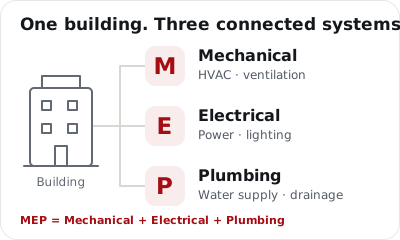
MEP stands for Mechanical, Electrical and Plumbing. In construction and building engineering, MEP refers to the three core technical disciplines responsible for systems such as air conditioning and ventilation, electrical power and lighting, water supply, drainage and related building services.
- Mechanical
- HVAC, air conditioning, ventilation and related mechanical systems.
- Electrical
- Power distribution, lighting, wiring, DBs, emergency power and related electrical systems.
- Plumbing
- Water supply, drainage, sanitary systems, pumps and related pipework.
What Is the Full Form of MEP?
The full form of MEP is Mechanical, Electrical and Plumbing. M means Mechanical, E means Electrical and P means Plumbing. The abbreviation groups the building services that manage indoor conditions, deliver power and handle water.
| Letter | Full form | Typical systems |
|---|---|---|
| M | Mechanical | HVAC, AC, ventilation, ducting |
| E | Electrical | Power, lighting, wiring, distribution boards |
| P | Plumbing | Water supply, drainage, sanitary systems |
What Does MEP Mean in Construction?
In construction, MEP means the technical building services that help a property operate safely and comfortably. Villas, apartments, offices, retail spaces, restaurants, warehouses and commercial buildings all depend on these systems, including during fit-out projects.
Coordination means making space for ducts, cables and pipes while checking that the systems connect to the equipment they serve. For installation stages and site execution, see what MEP work includes in construction.
What Does “M” Mean in MEP?
M means Mechanical. This discipline includes HVAC: heating, ventilation and air conditioning. In many Dubai buildings, air conditioning, fresh-air supply and exhaust ventilation are prominent mechanical services.
Typical systems include AC equipment, ductwork, fans, mechanical equipment, associated controls and pumps where the system requires them. A pump's discipline depends on its function: a water-supply pump belongs to the plumbing system. Explore HVAC services for practical mechanical scope examples.
What Does “E” Mean in MEP?
E means Electrical. Electrical services distribute power from the main supply through main and sub-main distribution to the circuits and equipment in a building. Distribution boards, or DBs, contain circuit protection and distribution components.
The discipline covers cabling, wiring, lighting, sockets, power outlets, earthing and emergency lighting. Electrical testing checks the completed installation against the relevant design and requirements. Our electrical works page explains typical installation and maintenance tasks.
What Does “P” Mean in MEP?
P means Plumbing. Plumbing delivers water to fixtures and equipment and carries wastewater away. It includes water supply, drainage, sanitary plumbing, pipework, valves, fixtures, water heaters and pumps where applicable.
Pressure testing, appropriate drainage checks and sound connections help identify defects and prevent leaks. The exact arrangement depends on the building and its use. See plumbing works for examples of water and drainage services.
MEP Meaning in Different Contexts
The meaning of MEP stays Mechanical, Electrical and Plumbing. The words around it describe a role, document or stage of work.
| Context | What MEP means |
|---|---|
| Construction | The mechanical, electrical and plumbing services installed within a project. |
| Building engineering | The design, analysis and coordination of technical building services. |
| Interior fit-out | Services arranged or adapted for a new internal layout and equipment. |
| Facilities management | Building systems managed to support day-to-day operation. |
| MEP maintenance | Inspection, servicing and repair of mechanical, electrical and plumbing assets. |
| MEP drawings | Plans and diagrams showing service routes, equipment, connections and layouts. |
| MEP contractor | A firm that delivers the agreed building-services installation or maintenance scope. |
| MEP engineer | An engineer working on one or more building-services disciplines, depending on the role. |
What Are MEP Systems?
MEP systems are the connected installations that provide cooling, ventilation, electrical power, lighting, water supply and drainage. Their controls and equipment interfaces also need coordination.
Modern project packages may coordinate ELV and CCTV systems and fire-safety interfaces alongside the core disciplines. These additional systems are not separate letters in M-E-P. Scope boundaries should identify the specialists and interfaces involved.
Testing and commissioning check individual systems and their operation together before handover.
MEP vs HVAC — What Is the Difference?
HVAC is normally part of Mechanical in MEP. HVAC covers heating, ventilation and air conditioning. MEP is broader: it includes mechanical services together with electrical power, lighting, water supply and drainage.
MEP vs Electrical — What Is the Difference?
Electrical is one of the three core MEP disciplines. An electrical package focuses on power and related installations. An MEP package brings that electrical work together with mechanical and plumbing services under an agreed scope.
MEP vs Civil Engineering
MEP focuses on building services. Civil engineering generally addresses infrastructure and construction elements, while structural engineering focuses on load-bearing structures. The disciplines coordinate openings, equipment supports, plant spaces and service routes where their work meets.
What Is an MEP Contractor?
An MEP contractor delivers the mechanical, electrical and plumbing work agreed for a project. Responsibilities may include procurement, installation, coordination, testing and maintenance. The contract defines the actual package. Read about the role of an MEP contractor for a fuller explanation.
What Is an MEP Engineer?
An MEP engineer works on technical building services. Depending on the role and project, tasks may include design review, load requirements, layouts, technical calculations, drawings, specifications, testing and site coordination. An engineer may specialise in one discipline or coordinate several. Responsibilities depend on the appointment and expertise required.
Why Is MEP Important in a Building?
MEP enables everyday building functions: comfortable indoor conditions, usable power, clean water, effective drainage and ventilation. Coordinated design and installation also support safety, energy performance, maintainability and orderly handover.
For example, a well-positioned AC unit still needs suitable electrical power and condensate drainage. Accessible valves, labelled circuits and equipment records make future MEP maintenance easier.
Simple Example of MEP in a Dubai Villa
Think of the systems serving a villa's rooms, kitchen and bathrooms:
- Mechanical: AC units, ducting and ventilation bring conditioned air into the occupied rooms.
- Electrical: the DB distributes power to lighting, sockets, appliances and other equipment.
- Plumbing: water feeds the kitchen and bathrooms, while drains carry wastewater away. Pumps and water heaters are included where applicable.
These systems interact. Air-conditioning needs electrical power, and its condensate must drain through a suitable route.
MEP Meaning in Dubai and UAE Projects
In Dubai and UAE projects, MEP usually refers to the same three disciplines, whether the project is new construction, a villa, a commercial or office fit-out, retail, a restaurant, a warehouse, renovation or maintenance.
The term describes the disciplines; the project documents describe the work. A fit-out MEP package may adapt existing services, while a new building needs a broader installation. See MEP services in the UAE for service examples.
Frequently Asked Questions
What is the full form of MEP?
The full form of MEP is Mechanical, Electrical and Plumbing. These three disciplines cover building services such as air conditioning and ventilation, power distribution and lighting, water supply and drainage. The abbreviation describes the disciplines rather than a fixed list of contracted tasks.
What does MEP stand for?
MEP stands for Mechanical, Electrical and Plumbing. In building engineering, the letters group services that support indoor conditions, electricity and water. A project's drawings and specifications define which equipment, installations and interfaces belong to its particular MEP package.
What is MEP meaning in construction?
MEP in construction means the mechanical, electrical and plumbing services incorporated into a building. These systems provide functions such as cooling, ventilation, power, lighting, water supply and wastewater drainage. Their routes and equipment positions need coordination with the building layout.
What are the three parts of MEP?
The three parts are Mechanical, Electrical and Plumbing. Mechanical includes HVAC and related equipment. Electrical includes power distribution, wiring and lighting. Plumbing includes water supply, drainage and sanitary systems. Each discipline also connects to other systems where the design requires it.
Is HVAC part of MEP?
Yes. HVAC is normally part of the Mechanical discipline in MEP. Heating, ventilation and air conditioning manage indoor conditions and airflow. HVAC equipment also needs coordinated electrical supplies, controls and appropriate drainage, connecting it to the wider building-services package.
Is electrical work part of MEP?
Yes. Electrical is the E in MEP and one of its three core disciplines. Typical building electrical work includes distribution boards, circuits, cabling, lighting, sockets, earthing and testing. The actual installation scope depends on the drawings and the equipment served.
Does plumbing come under MEP?
Yes. Plumbing is the P in MEP. It includes water supply, drainage, sanitary fixtures, pipework and related equipment such as water heaters or pumps where needed. Plumbing systems supply usable water and provide a route for wastewater to leave the building.
What is an MEP contractor?
An MEP contractor is a company appointed to carry out an agreed mechanical, electrical and plumbing package. It may coordinate supply, installation, testing or maintenance. Some specialist systems may involve separate contractors, so the written scope should identify responsibility for each part.
What is an MEP engineer?
An MEP engineer works on mechanical, electrical or plumbing building services. Depending on the appointment, the role may involve calculations, drawing review, equipment requirements, specifications, system coordination or testing. Some engineers specialise in one discipline; others have a broader coordination role.
What is an MEP drawing?
An MEP drawing shows building-service information such as equipment positions, pipe or duct routes, electrical layouts and connection points. Different drawings may cover separate disciplines or combine them for coordination. A drawing's purpose and level of detail depend on the project stage.
What is the difference between MEP and HVAC?
HVAC concerns heating, ventilation and air conditioning. MEP includes HVAC within Mechanical and also covers Electrical and Plumbing. A request for HVAC work alone therefore does not automatically include a building's lighting, socket circuits, water supply or sanitary drainage installations.
Why is MEP important in buildings?
MEP provides the systems people rely on to use buildings comfortably and practically: power, lighting, air conditioning, ventilation, water and drainage. Good coordination also supports safe operation, energy performance, service access and a clear handover of equipment and system records.
Terminology reference: Autodesk's Mechanical, Electrical and Plumbing documentation.
Need help with MEP works in Dubai or UAE?
Power Craft MEP Contracting LLC supports electrical, HVAC, plumbing, ELV, CCTV, fit-out MEP, maintenance, testing and commissioning for suitable projects.